Understanding Abdominal Pain: What the Four Quadrants Could Mean
Abdominal pain can have many causes — recognizing the signs can help you decide when it’s time to seek care.


Written by: Corey Alexander
Published on: February 4, 2026
Stomach pain can be a real mystery, but did you know that where you feel the pain can give important clues about what’s going on?
In fact, your abdomen is divided into four sections, or quadrants, and each one is home to specific parts of your body. The location of your pain can hint at what might be causing your discomfort.
Let’s take a closer look at the four quadrants and what pain in each area could mean.
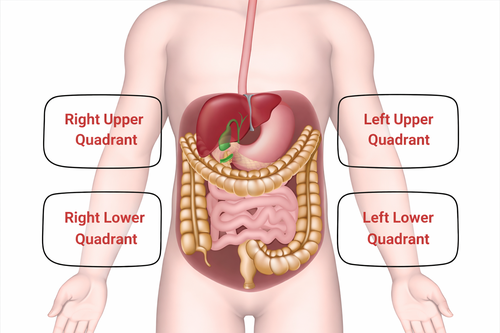
Upper Right Quadrant
Pain in the upper right quadrant of your abdomen might point to conditions like gallstones, or liver inflammation.
Gallstones are one of the most common digestive disorders in the U.S., contributing to over 1.2 million emergency department visits annually according to The Centers for Disease Control and Prevention (CDC). They form when bile, a digestive fluid, contains too much cholesterol or bilirubin, leading to hard deposits in the gallbladder. While many people with gallstones experience no symptoms, others may feel sharp, sudden pain in the upper right abdomen, especially after eating fatty meals.
Liver-related pain in this area could stem from conditions like hepatitis or fatty liver disease. Symptoms might include persistent discomfort, fatigue, or yellowing of the skin and eyes (jaundice).
If you’re feeling sharp or persistent pain in this area, it’s worth getting checked out.
Upper Left Quadrant:
Pain in the upper left quadrant can often be linked to your stomach and is caused by gastritis or stomach ulcers. These conditions often result from an overproduction of stomach acid or an infection. Symptoms might include burning pain, nausea, or bloating, especially after eating.
Another potential cause of pain in this quadrant is pancreatitis, or inflammation of the pancreas. This condition is often linked to gallstones or heavy alcohol use. Pancreatitis can cause severe pain that radiates to your back, along with nausea, vomiting, and fever.
The spleen, which helps filter your blood and fight infections, is also located in this area. While spleen-related issues are less common, according to the CDC, they can lead to serious complications if untreated.
If you’re experiencing persistent or severe pain in this quadrant, especially with symptoms like fever, vomiting, or changes in appetite, it’s important to seek medical care.
Lower Right Quadrant:
Sharp pain in this area is often linked to appendicitis, which happens when your appendix becomes inflamed. This condition typically starts with a dull pain near your belly button that shifts to the lower right side and becomes sharp. Appendicitis is a medical emergency, and the CDC reports that it’s one of the leading causes of abdominal pain requiring surgery in the U.S.
This area is also home to part of your intestines, so pain here could be linked to conditions like irritable bowel syndrome (IBS) or Crohn’s disease, which can cause cramping, diarrhea, or constipation.
Lower Left Quadrant:
Pain here is often tied to your large intestine. A common cause is diverticulitis, which occurs when small pouches in the walls of your colon become inflamed or infected. This condition is more common in adults over 40 and can cause sharp pain, fever, and changes in bowel habits.
Other potential causes include constipation. In some cases, pain in this area could also be linked to gynecological issues, such as ovarian cysts or endometriosis, in women.
The CDC emphasizes that while many cases of lower left quadrant pain are mild, persistent or worsening pain, especially with fever or blood in your stool, should be evaluated by a healthcare provider.
Care You Can Trust
If you’re unsure about the cause of your abdominal pain, it’s always best to get it checked out.
Riverview Health Emergency Room & Urgent Care is the only health system in Hamilton County offering ER and urgent care services under one roof. Unlike most ER or urgent care centers, patients are only billed for the level of services they need. The ER is open 24 hours a day, seven days a week. The urgent care center is open from 7 a.m. to 8 p.m. daily. No appointments are necessary for in-person visits.
Riverview Health Emergency Room & Urgent Care has four convenient locations:
- Riverview Health Westfield Hospital is located at 17600 Shamrock Blvd, Westfield, IN 46074, and may be reached at 317.214.5555.
- Riverview Health Emergency Room & Urgent Care Carmel is located at 14585 Hazel Dell Pkwy., Carmel, IN 46033, and may be reached at 317.406.4280.
- Riverview Health Emergency Room & Urgent Care Fishers is located at 9690 E. 116th St., Fishers, IN 46037, and may be reached at 317.406.4585.
- Riverview Health Emergency Room & Urgent Care West Carmel/Zionsville is located at 10830 N. Michigan Rd., Zionsville, IN 46077, and may be reached at 317.406.4713.